

It often sounds simple at first.
“My lower back feels tight every time I stand up.”
“It hurts after I sit too long.”
“It feels like my back is the problem, but stretching it never really fixes anything.”
A lot of people describe this as low back pain, and sometimes that is exactly what it is. But not always.

In some cases, the lower back is where the pain shows up while the real driver involves the hips, the pelvis, or the way those areas are moving together. That overlap is well recognized in the medical literature. Reviews of the hip-spine relationship note that hip and lumbar spine problems can mimic each other, coexist, and make diagnosis harder if the evaluation stays too narrow.
At Innerve8 Medical, that is where the conversation starts. The painful area matters, but it is not always the whole story.
What hip-related back pain can feel like
People are often surprised by how easily hip-related problems can be mistaken for back pain.
Sometimes it shows up as tightness across one side of the low back. Sometimes it feels deeper in the buttock. Sometimes it is worst after sitting, getting out of the car, walking longer distances, or standing up after being still for a while. In other people, it feels like back pain with stiffness that never fully goes away, even when they stretch the lower back repeatedly.
That pattern makes sense. Hip conditions can cause pain and stiffness that affect everyday activities like rising from a chair, bending, or taking a short walk. AAOS notes that hip osteoarthritis can make it hard to do basic daily activities and often causes pain and stiffness.
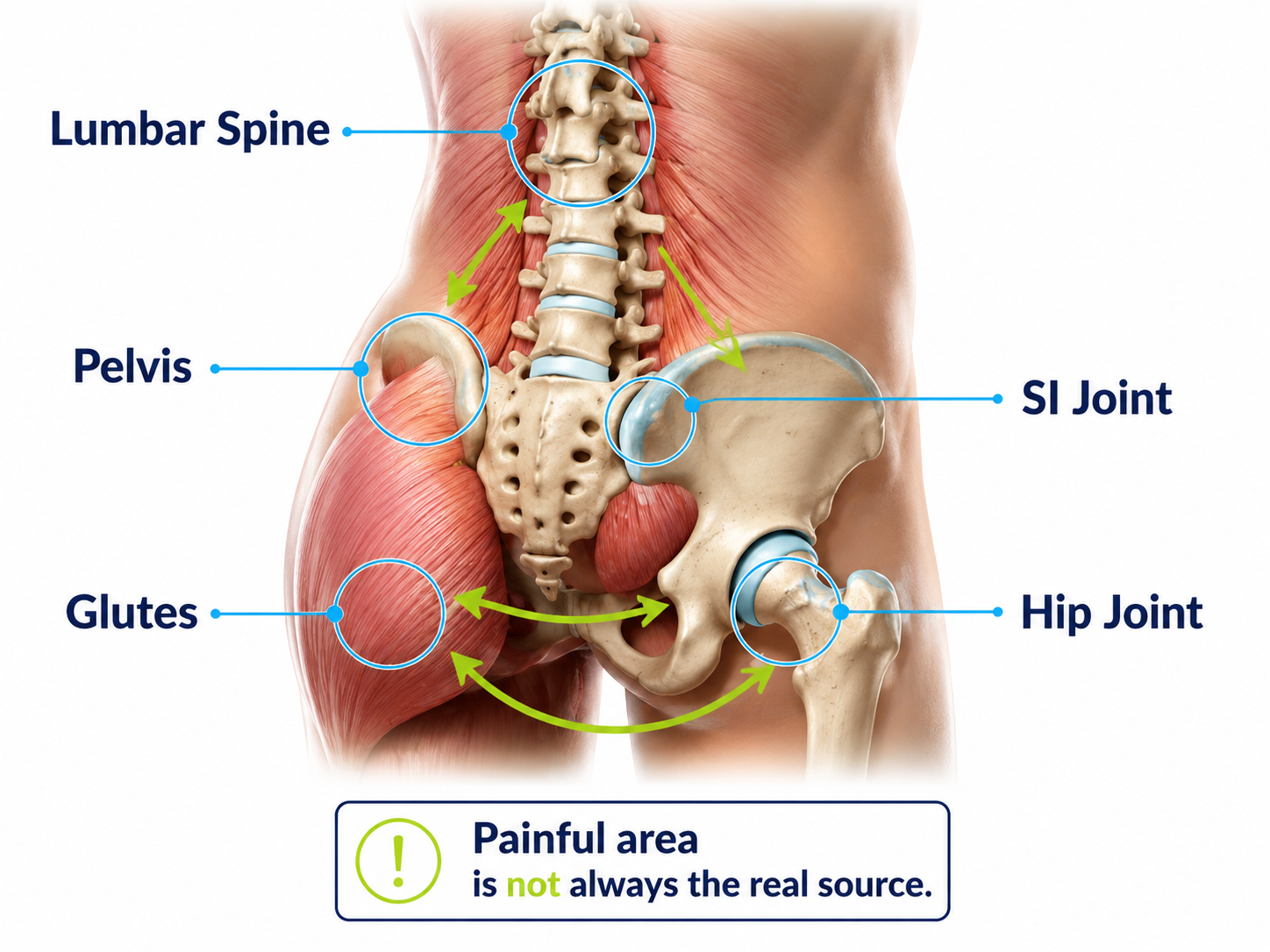 The pelvis can also be part of the picture. Mayo Clinic notes that sacroiliitis can cause pain and stiffness in the buttocks or lower back, and that the pain may worsen with prolonged sitting, standing, or stair climbing. Mayo’s sports medicine overview also notes that sacroiliac joint pain is commonly felt in the low back and buttock and can be aggravated by sit-to-stand transitions, stair climbing, and prolonged positions.
That is why “my back hurts” is not always enough information by itself.
Why the lower back is not always the whole story
The lower back and hips do not work in isolation.
They share load. They share motion. They influence each other every time you sit, stand, walk, bend, or rotate. If the hips are stiff, if one side is not moving well, or if the pelvis is not handling force efficiently, the lower back often ends up doing more work than it should. Over time, that can create irritation, tightness, or recurring pain patterns.
That is one reason hip-spine problems can be so frustrating. A person may keep chasing the painful area while the body continues compensating underneath it. Reviews on hip-spine syndrome describe exactly this kind of overlap, where symptoms may involve the low back, buttock, groin, thigh, or even the knee, making it easy to focus on the wrong region first.
This is also why some people say, “I thought it was my back, but my hip has felt tight the whole time.” Others notice that the pain is worse after sitting for a long time, worse when first standing up, or worse when walking longer distances. Those details matter because they help show whether the pattern is behaving more like an isolated lumbar issue, a hip problem, sacroiliac involvement, or a combination.
At Innerve8, we pay attention to that difference.
How the right treatment depends on the pattern
This is where a more complete evaluation matters.
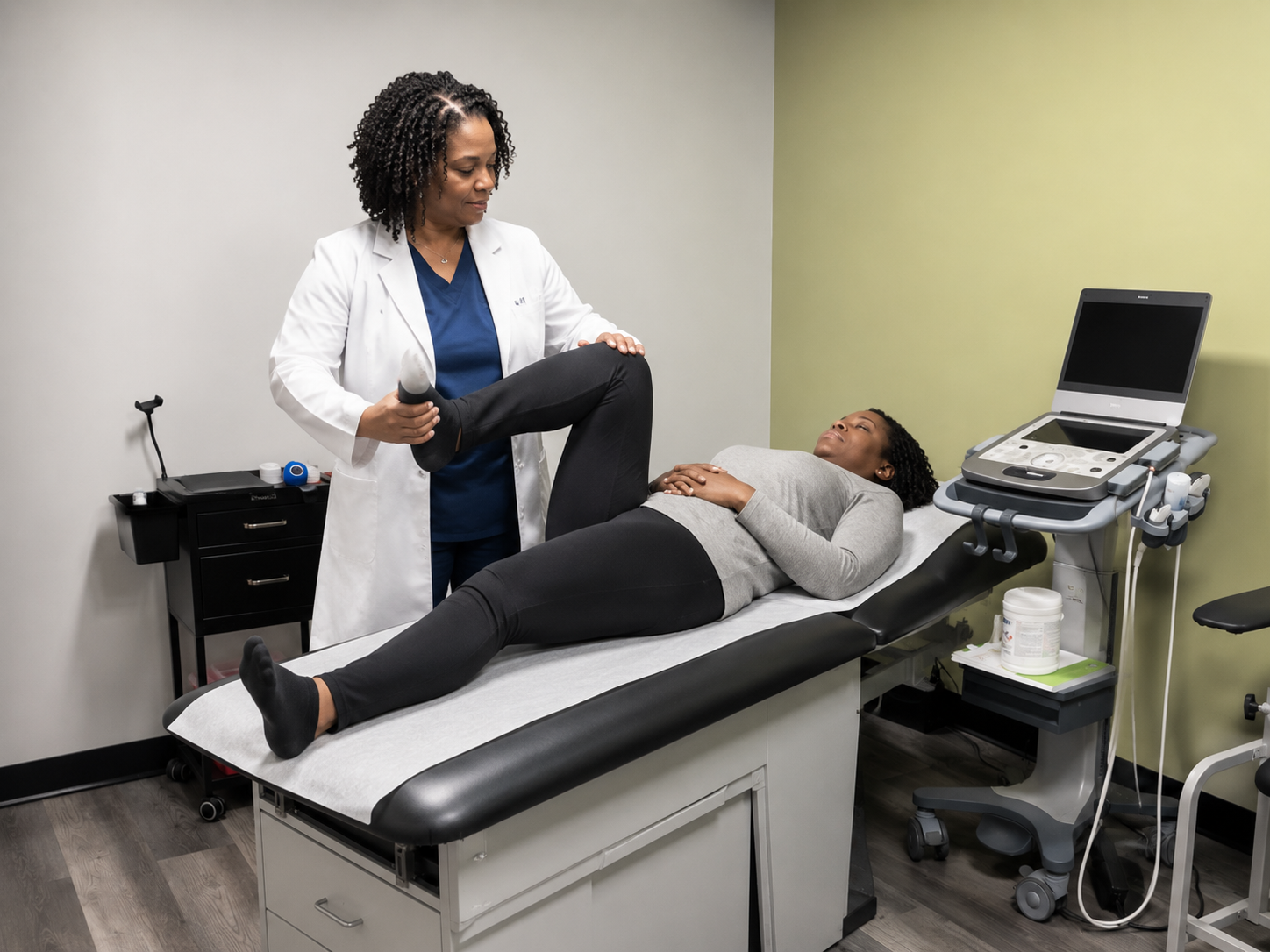
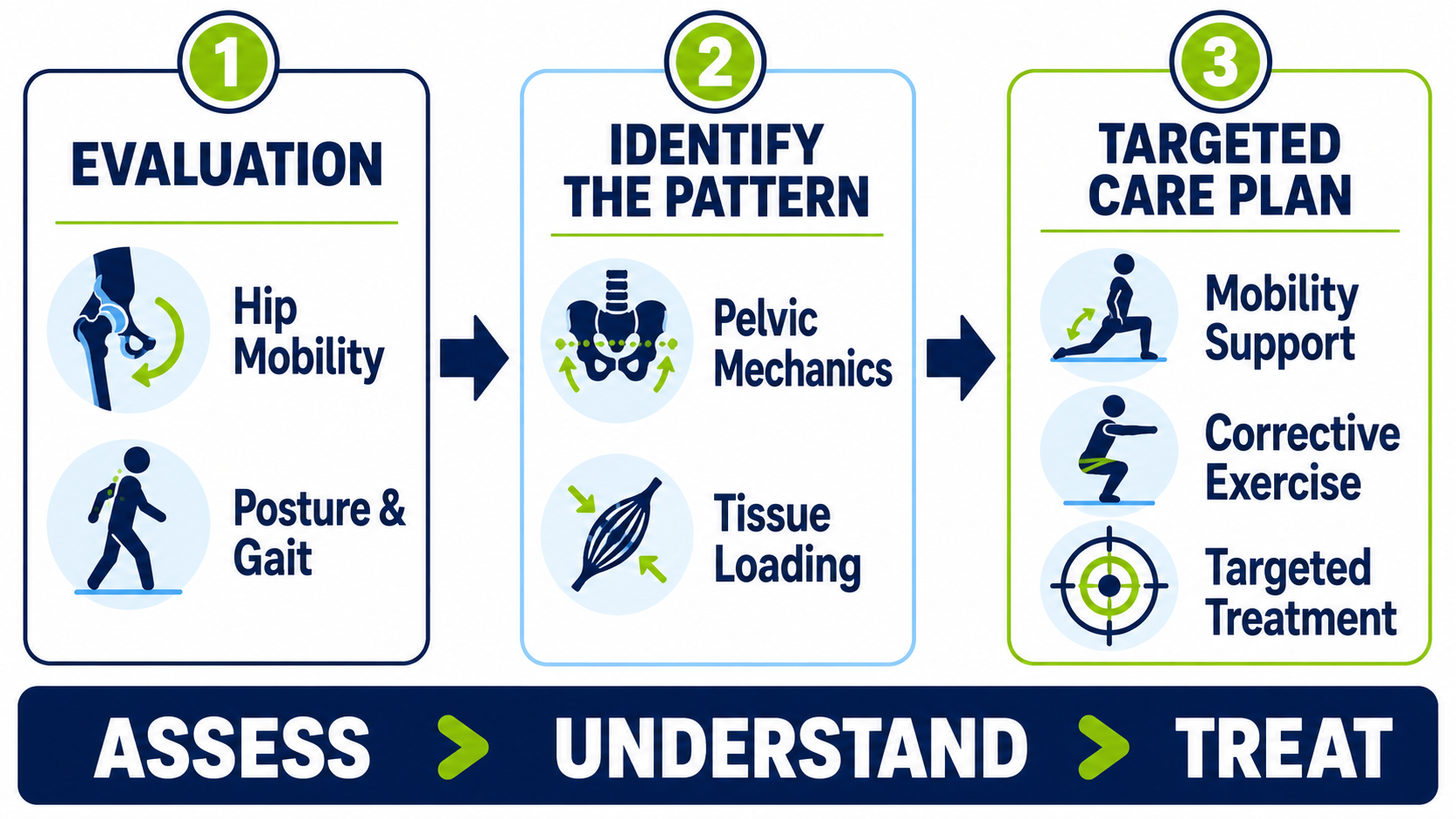
At Innerve8 Medical, we do not just ask where it hurts. We look at how the hips, pelvis, and lower back are functioning together. That includes motion, posture, walking pattern, hip rotation, tissue tension, joint loading, and whether the pain seems to change with sitting, standing, bending, or weight transfer.
That broader look matters because treatment should match the pattern.
In some patients, hip stiffness is a major driver. In others, the pelvis or sacroiliac region is contributing. In others, the lower back is taking on more motion because the hips are not doing their job well. And in some cases, there is true overlap, where both the hip and lumbar spine need attention.
That is why generic advice often falls short. Rest may calm things down briefly. Stretching the low back may feel good for a moment. But if the real issue is poor hip mobility, weak control, or a compensation pattern that keeps overloading the same region, short-term relief is not the same as solving the problem.
Depending on what the evaluation shows, care may include chiropractic adjustments to restore motion where appropriate, corrective exercise and sports rehabilitation to improve control and load tolerance, and Graston Therapy when soft tissue restriction is part of the picture. In selected cases, trigger point injections may also play a role when muscle dysfunction is keeping the pattern active. And when tissue health and longer-term support become part of the larger conversation, regenerative therapies may be considered as part of a non-surgical plan. The goal is not to stack treatments randomly. The goal is to understand the pattern and build the plan from there.
When it is time to look deeper
There are times when recurring “back pain” deserves a more complete look.
If the pain keeps returning after sitting, feels one-sided, shows up in the buttock or outer hip, gets worse with walking or standing, or never really improves even though you keep treating the lower back, it may be time to ask whether the hips or pelvis are part of the story.
It is also important not to ignore red flags. Significant trauma, progressive weakness, loss of bowel or bladder control, or numbness in the saddle region can point to more urgent spinal problems. AAOS notes that these kinds of symptoms deserve immediate medical attention.
For everyone else, the bigger point is simpler. The painful area is not always the true starting point. Some low back pain starts in the back. Some does not.
If this sounds familiar, call (703) 739-0500 or click here to schedule an evaluation. At Innerve8 Medical, we look at how the lower back, hips, and pelvis are working together so the next step can be more targeted, more thoughtful, and more sustainable.