


For many people, surgery does not enter the conversation after one bad day.
It usually comes after months or years of joint pain. Maybe medication helped temporarily. Maybe therapy improved movement but did not fully resolve the problem. Maybe an injection provided relief, only for the pain to return. Daily activities slowly become harder, and eventually someone says, “You may need surgery.”
 That can feel like the end of the road.
Sometimes surgery is the right decision. Severe joint damage, major instability, certain traumatic injuries, or significant loss of function may require a surgical solution. But not every painful joint has reached that point, and not every patient is ready to make that decision without first understanding whether another reasonable option exists.
For selected patients, regenerative care may be worth evaluating before surgery. The goal is not to promise a new joint or suggest that every operation can be avoided. The goal is to determine whether pain, movement, and function may improve enough to make surgery less urgent—or potentially delay it while the patient remains active. At Innerve8 Medical, that decision starts with a thorough evaluation, not with choosing a procedure.
Why surgery is not always the first—or only—conversation
Joint pain exists on a spectrum.
At one end, a patient may have mild irritation, an overworked tendon, or early joint degeneration. At the other, there may be severe structural damage, advanced arthritis, major instability, or a condition that clearly requires surgical repair.
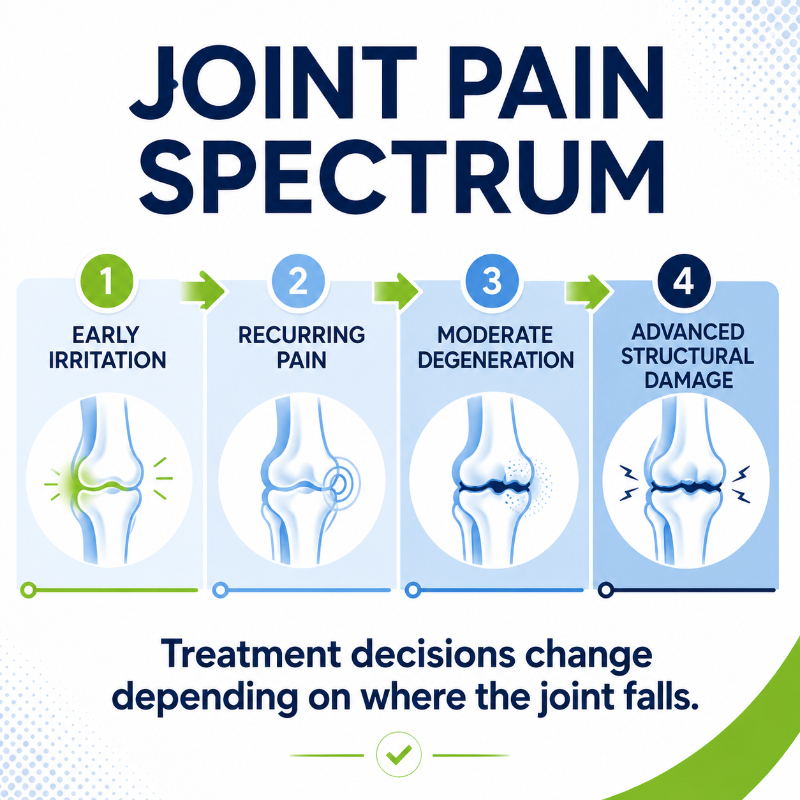 Between those two ends is a large group of people who are still moving and functioning, but not comfortably. They may have already tried rest, medication, rehabilitation, lifestyle changes, or conventional injections without getting the improvement they hoped for. They are not necessarily ideal surgical candidates yet, but they also do not want to continue repeating the same short-term cycle.
This is where regenerative care may enter the discussion.
Platelet-Rich Plasma, commonly called PRP, is one example. It is being used for selected cases of joint pain, early-to-moderate knee osteoarthritis, and some chronic tendon problems. However, evidence is not equally strong for every joint, injury, or stage of degeneration.
That distinction matters. Regenerative care should never be presented as a universal replacement for surgery. A credible conversation must include the possibility that a patient may not be a good candidate.
What regenerative care is actually trying to do
PRP uses a concentrated portion of the patient’s own blood.
A blood sample is collected and processed to separate and concentrate platelets. The preparation is then placed into the targeted joint or injured tissue. Platelets contain proteins and signaling factors involved in the body’s response to tissue injury.
The purpose is to support a more constructive healing environment. That is different from treatments designed primarily to suppress inflammation or temporarily block pain.
But that does not mean PRP predictably rebuilds damaged cartilage, reverses advanced arthritis, or restores every injured tissue to its original condition. Those claims go further than the evidence supports.
The response also tends to be gradual. A patient may experience soreness after the procedure, and meaningful improvement may develop over several weeks rather than immediately. Some patients report considerable improvement in pain and function. Others experience a more modest change, and some do not respond enough to justify repeating treatment.
That is why the condition of the joint, the accuracy of the diagnosis, and the patient’s expectations all matter before treatment begins.
Who may be worth evaluating before surgery
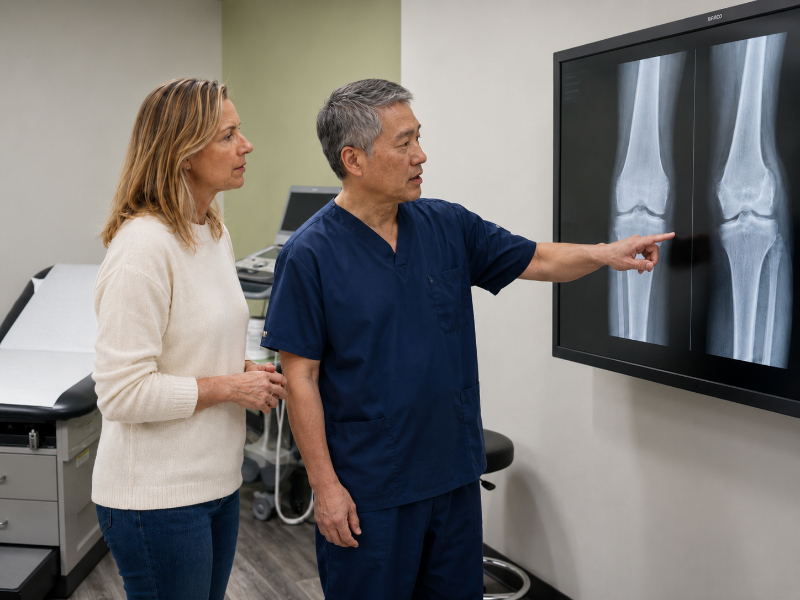
A regenerative-care evaluation may be reasonable for someone with recurring joint or tendon pain who still has useful motion and function but is beginning to lose comfort, confidence, or activity.
That may include selected patients with:
- Mild-to-moderate joint degeneration
- Knee osteoarthritis
- Chronic tendon irritation
- Pain that has not improved enough with appropriate conservative care
- A desire to remain active while postponing a major procedure
- An interest in reviewing reasonable non-surgical options before deciding on surgery
These are not automatic qualifications. They are reasons to investigate further.
A patient with severe joint destruction, major mechanical instability, an untreated infection, or an injury requiring surgical repair may be less likely to benefit. Treatment is also unlikely to succeed when the painful structure has been identified incorrectly or when expectations depend on completely rebuilding an advanced “bone-on-bone” joint.
The point of the evaluation is not to find a reason to perform regenerative treatment. It is to determine whether the treatment makes sense for that particular patient.
Why the evaluation matters more than the treatment name
Two patients can both say, “My knee hurts,” and still have very different problems.
One may have early osteoarthritis with reasonable stability and mobility. Another may have a meniscus injury, advanced joint degeneration, poor hip control, or significant weakness that is changing how force travels through the knee.
Giving both patients the same treatment simply because the painful area is the same would ignore the reason the pain developed.
At Innerve8 Medical, we look at the joint as part of a larger system. The evaluation may include range of motion, stability, strength, posture, movement patterns, previous imaging, tissue loading, and compensation from nearby areas.
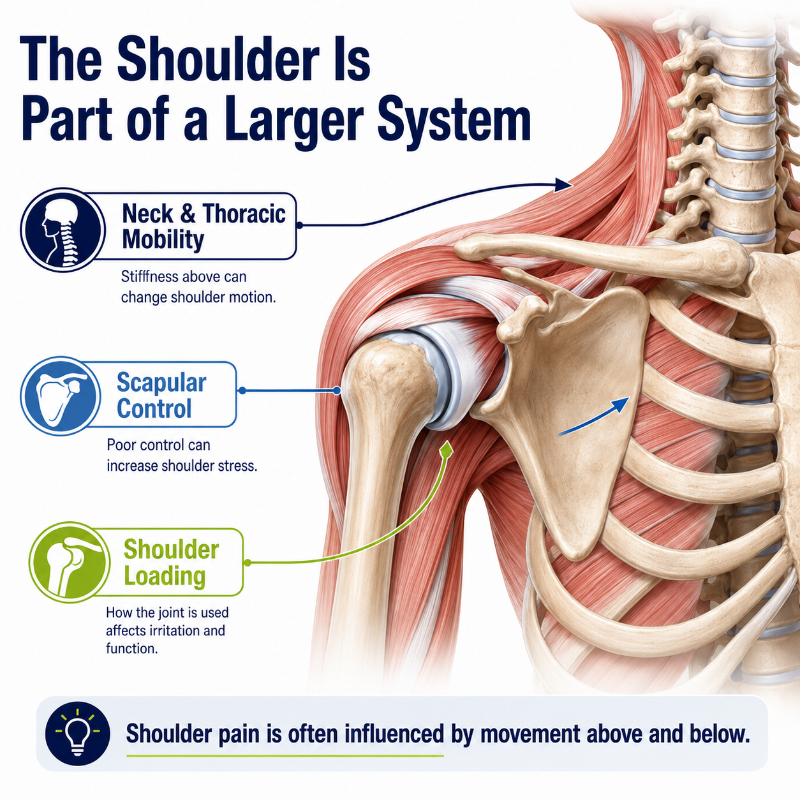 For example, knee stress may be influenced by hip control or ankle restriction. Hip pain may be affected by the pelvis or lower back. Shoulder irritation may persist when the shoulder blade and upper back are not moving efficiently.
An injection into the painful area does not automatically correct the reason that area became overloaded.
That is why regenerative care may be combined with corrective exercise, physical or sports rehabilitation, mobility work, chiropractic adjustments, Graston Therapy, or other targeted care when appropriate. The goal is not to stack services. It is to improve the environment in which the joint or tissue is being asked to function.
What realistic results look like
Regenerative care is not an overnight solution.
Improvement generally develops gradually, and soreness or temporary irritation may occur after treatment. Results vary based on the diagnosis, severity of the condition, preparation used, accuracy of placement, activity level, and how the joint continues to be loaded afterward.
Some patients experience meaningful improvement for months. Others notice a smaller change. Some may eventually need surgery despite trying a non-surgical option first.
More than one treatment may occasionally be considered, but patients should be cautious of automatic packages that are recommended before their response is known. The number and timing of treatments should reflect the diagnosis, treatment plan, and progress—not a preset sales formula.
The honest goal is not to promise a new joint.
It is to determine whether pain can decrease, movement can improve, and function can be preserved enough to delay surgery or make it less urgent. For the right patient, that can be a meaningful outcome.
A better question before making a surgical decision
Instead of asking only, “Does regenerative care work?” it is more useful to ask:
What is actually causing my pain?
How advanced is the damage?
Do I still have enough joint function to justify a less invasive option?
What result would be realistic for me?
What happens if I delay surgery?
What findings would indicate that surgery is the more appropriate choice?
And will the treatment plan address the movement and loading patterns around the joint—not just the painful area?
A thoughtful provider should be willing to answer those questions clearly. They should also be willing to tell you when regenerative care is unlikely to provide enough benefit.
If joint pain is affecting how you move and surgery has entered the conversation, you deserve a clear understanding of your reasonable options before making that decision.
Call (703) 739-0500 or click here to schedule an evaluation with Innerve8 Medical. We will assess the condition of the joint, how your body is functioning around it, and whether regenerative care may be an appropriate part of a broader non-surgical plan.