

Injuries rarely start the week they show up.
They begin weeks earlier — when mobility decreases slightly, recovery falls behind workload, or one joint starts absorbing force it wasn’t designed to manage.
Performance may still be improving. Strength numbers climb. Speed increases. Endurance builds.
But beneath that progress, compensation can quietly accumulate.
At Innerve8 Medical, injury prevention isn’t based on stretching more or training less. It’s based on identifying where force is leaking, where load tolerance is dropping, and where asymmetry is increasing — before tissue failure occurs.
Why Athletic Injuries Build Gradually
Most non-contact athletic injuries develop when training demand exceeds the body’s structural capacity to absorb it.
We commonly evaluate patterns such as:
- Reduced hip internal rotation
- Limited ankle dorsiflexion
- Core instability under load
- Shoulder blade control deficits
- Side-to-side asymmetries
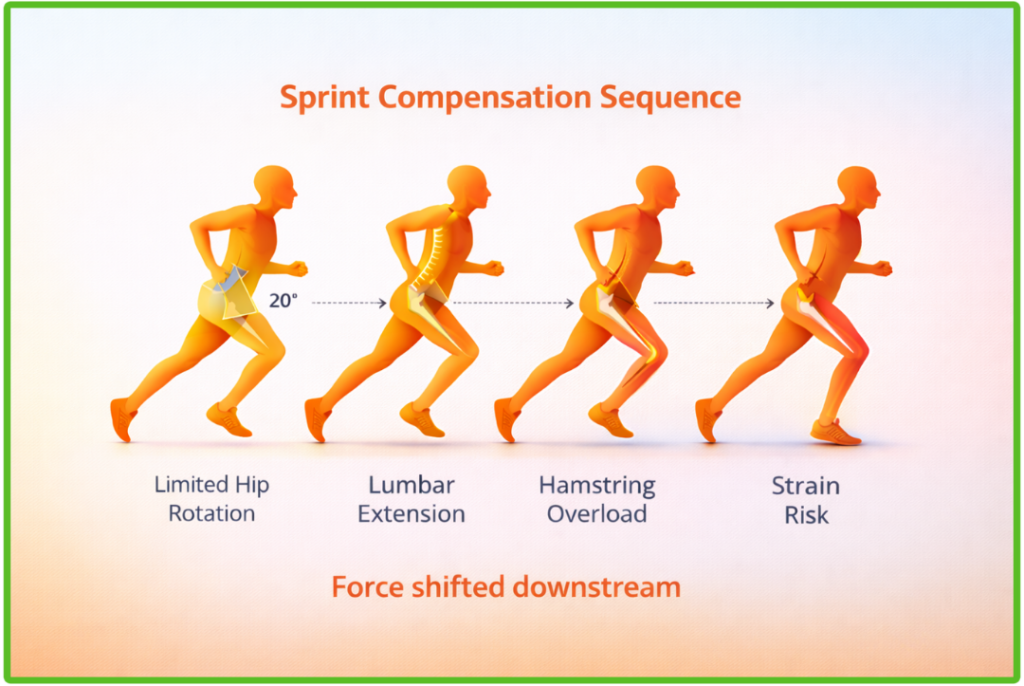
Consider this common compensation chain:
Limited hip rotation → increased lumbar extension during sprinting → anterior pelvic tilt → hamstring overload during terminal swing → strain.
The hamstring isn’t “weak.”
It’s absorbing force the hip should be managing.
Similarly:
Restricted ankle mobility → knee collapse inward → increased patellar stress → chronic knee irritation.
In both cases, the painful structure is rarely the starting point.
Injury prevention begins by identifying these patterns early.
Injury Prevention Through Integrated Evaluation
Every athlete’s sport places different demands on the body. A runner absorbs repetitive impact. A lifter manages heavy load transfer. A tennis player rotates and accelerates in multiple planes.
Our process begins with Spinal and Postural Screening with Range-of-Motion (ROM) analysis. This allows us to identify:
- Joint restrictions
- Side-to-side asymmetries
- Compensatory movement patterns
- Areas absorbing excess stress
Instead of waiting for pain, we identify risk patterns early.
Chiropractic Adjustments and Graston Therapy
Restricted joints change force distribution. When hips, shoulders, or the spine lose proper motion, surrounding tissues work harder to compensate.
At Innerve8 Medical, we use precise chiropractic adjustments to restore joint mobility and improve mechanical efficiency. This helps redistribute force properly during training and competition.
For soft tissue restrictions and scar tissue buildup, we incorporate Graston Therapy.
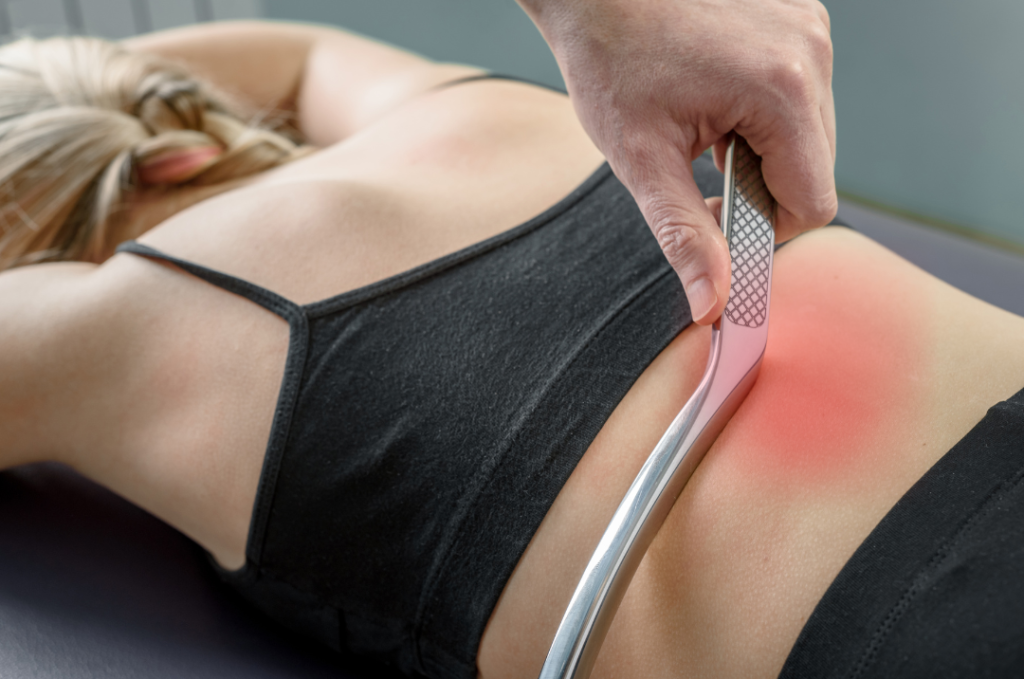
This instrument-assisted technique helps break down adhesions that limit mobility and contribute to strain.
Restoring movement quality protects athletes from repetitive overload.
StemWave, PRP, and Prolotherapy for Tissue Resilience
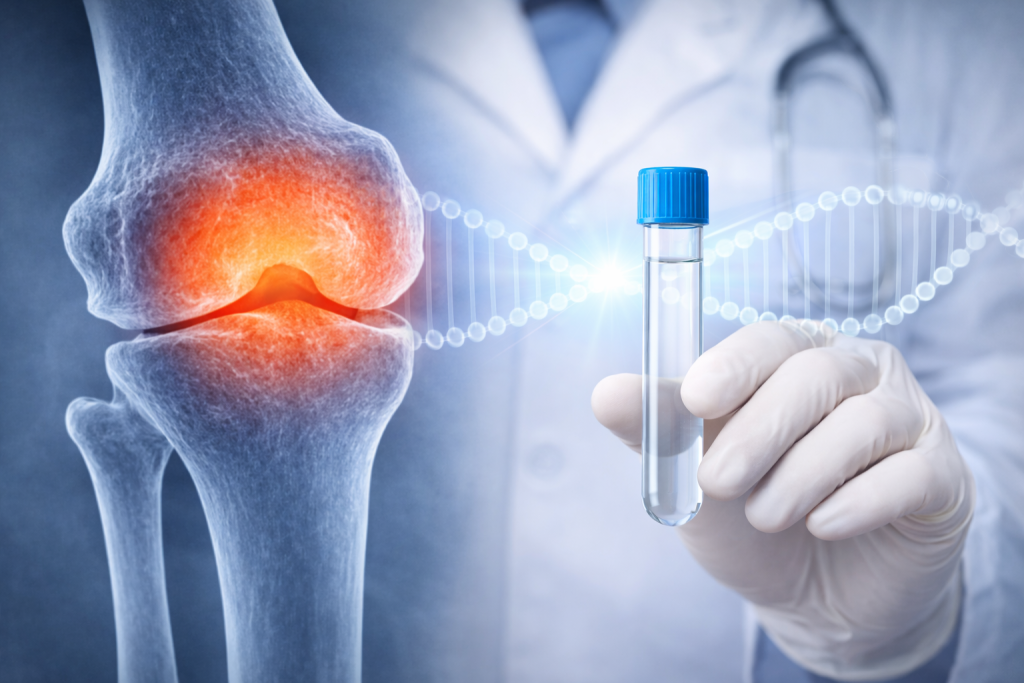
Some injuries aren’t mechanical — they’re biological.
When tendons, ligaments, or joint structures show signs of chronic irritation or slow recovery, we may incorporate Regenerative Therapies to strengthen vulnerable tissue before it worsens.
These include:
- StemWave – acoustic wave therapy that stimulates blood flow and activates the body’s natural healing response
- PRP (Platelet-Rich Plasma) – concentrated growth factors from your own blood to support tissue repair
- Prolotherapy – targeted injections that encourage ligament and joint stability
For athletes managing chronic tendinitis, early joint degeneration, or recurring soft tissue irritation, regenerative support helps reinforce tissue rather than simply reducing symptoms.
The goal is durability.
Sports Rehabilitation and Corrective Exercises
Injury prevention requires more than mobility — it requires control.
Through Sports Rehabilitation, Physical Rehabilitation, and Corrective Exercise programming, we address the specific weak links identified during evaluation.

This may include:
- Hip stabilization to reduce knee strain
- Rotator cuff strengthening for overhead athletes
- Core control drills to improve load transfer
- Ankle mobility and strength for running efficiency
Each program is tailored to your sport and your movement findings — not a generic exercise sheet.
Prevention becomes precise.
Trigger Point Injections and Pain Management Support
Muscle trigger points and persistent tightness can alter mechanics long before a major injury occurs.
When appropriate, we may incorporate Trigger Point Injections to reduce deep muscle tension that interferes with proper activation and force distribution.
Combined with hands-on care and rehabilitation, this helps restore clean movement patterns and prevent recurring flare-ups.
Why Integrated Care Matters for Athletes
Seeing one provider for pain, another for rehab, and another for performance often creates gaps.
At Innerve8 Medical, chiropractic care, regenerative therapies, rehabilitation, and movement screening work together under one plan.
That coordination allows us to:
- Identify risk factors early
- Reinforce vulnerable tissues
- Correct mechanical imbalances
- Improve recovery between training sessions
- Reduce preventable breakdowns
Athletes don’t just want relief. They want consistency.
Staying in the Game
You can’t eliminate every injury. But you can reduce the risk of preventable ones.
An integrated approach allows athletes to train with awareness, adapt intelligently, and correct problems before they escalate.
At Innerve8 Medical, we evaluate athletes who want to stay competitive, stay active, and protect their performance long-term.
If you’re serious about injury prevention, this is something we assess every day.
📞 Call (703) 739-0500 or schedule an evaluation at innerve8medical.com when you’re ready.