

Race day can bring a lot of energy, motivation, and momentum. For some people, it is the reward after weeks of training. For others, it is the push that gets them moving again.
But whether you are training for an event, walking a 5K, or picking up your pace for the season, one thing is common: many people ignore pain and tightness longer than they should.
A little soreness can be normal before or after race day. Lingering pain, repeated tightness, or discomfort that changes the way you move is different.
Knowing what to watch for can help you recover better, move with more confidence, and avoid pushing through something that deserves more attention.
What can be normal before or after race day?
Not every ache is a red flag.
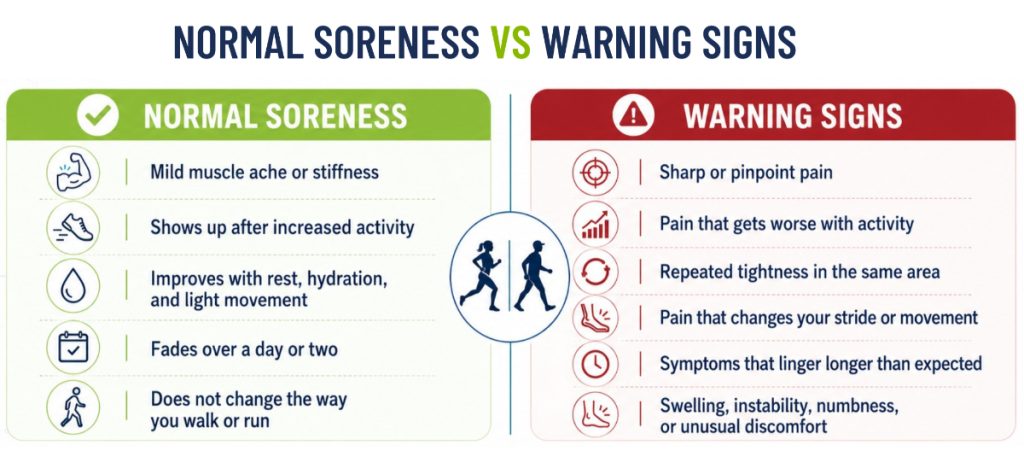
It is normal to feel some muscle soreness after increased activity, especially if you have pushed harder than usual, changed your pace, added hills, or have not been consistently training. It is also common to feel general fatigue, mild stiffness, or tightness that improves as you warm up or move around.
Normal soreness usually feels:
- mild to moderate
- muscular rather than sharp
- temporary
- better with time, light movement, hydration, and recovery
In most cases, that kind of soreness gradually settles down.
What should not be ignored?
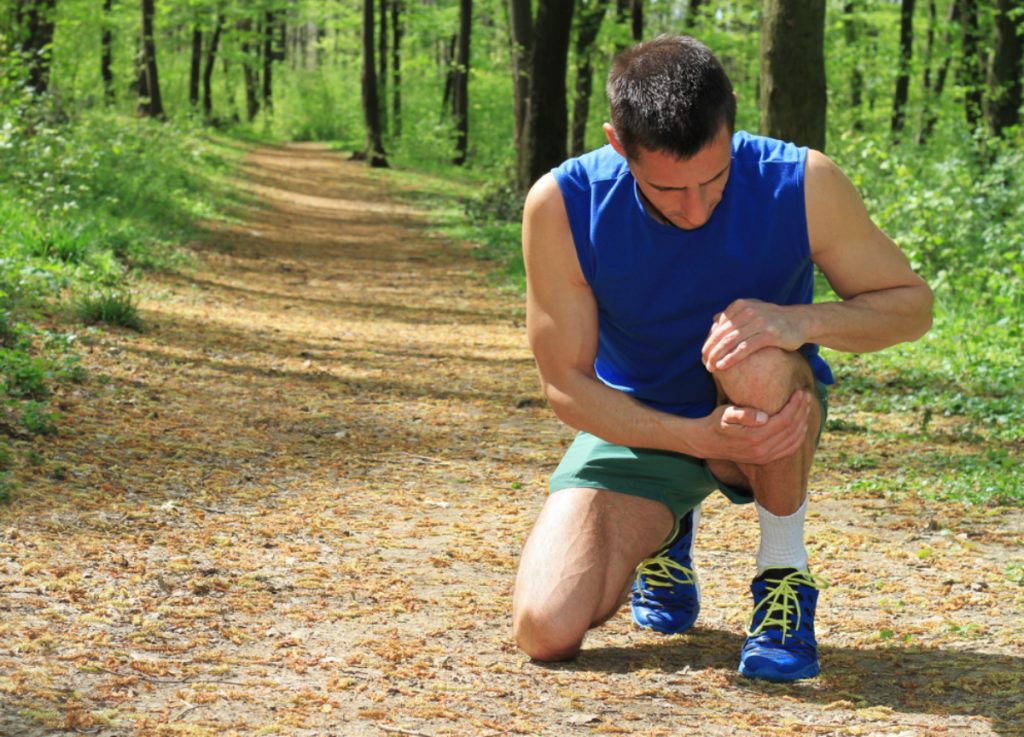
Pain that keeps showing up in the same area, gets worse with activity, or changes the way you walk or run deserves more attention.
Warning signs may include:
- sharp or pinpoint pain
- tightness that does not improve with rest or recovery
- discomfort that gets worse the longer you move
- pain that causes you to limp or change your stride
- symptoms that keep returning every time you train
- soreness that lasts longer than expected and does not feel like it is improving
This does not always mean something serious is wrong. It does mean your body may be compensating, overloading one area, or asking for a closer look.
Common areas runners and walkers notice before or after race day
Knee pain
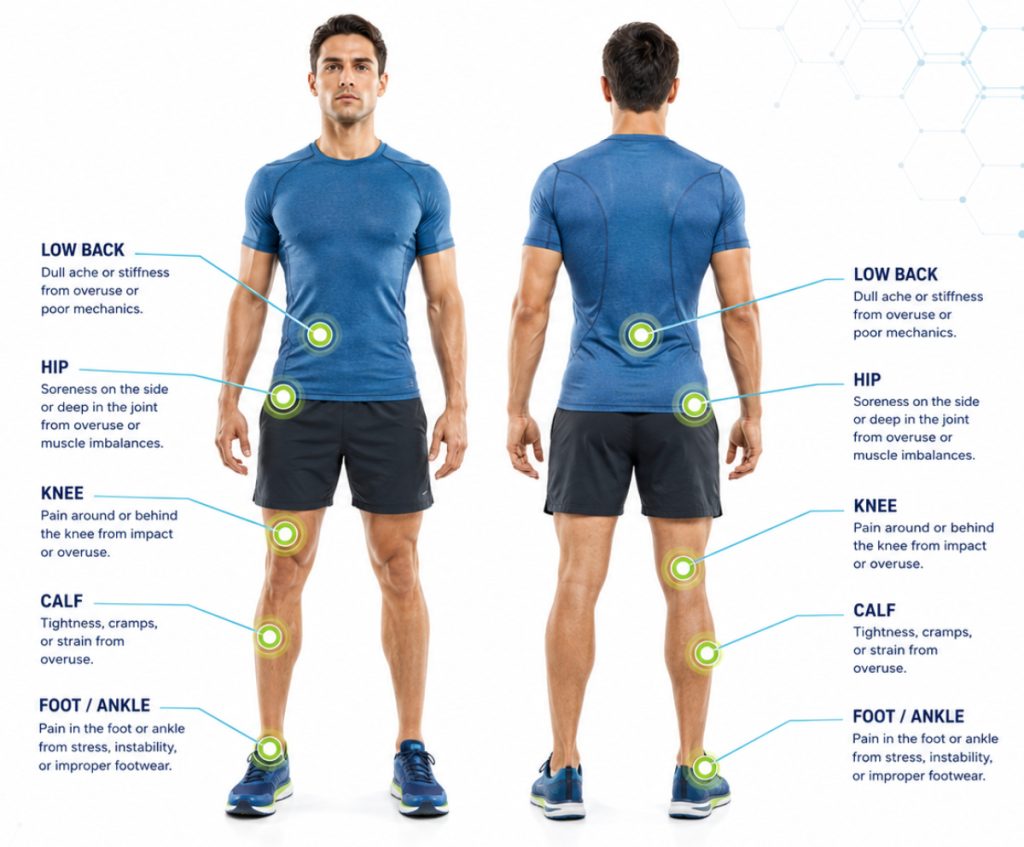
Knee pain is one of the most common complaints around walking and running events. Sometimes it shows up as pressure under the kneecap, discomfort going downhill or downstairs, or pain that gets worse with repeated mileage.
If the knee starts changing the way you move, that is worth paying attention to.
Hip tightness or discomfort
Hips often become tight when mobility, stability, or movement patterns are off. Some people feel pulling in the front of the hip. Others notice discomfort on the side or deep tightness that keeps coming back.
Hip tightness before or after race day is common, but repeated hip discomfort usually has a reason behind it.
Calf tightness or strain
Calves do a lot of work during walking, running, hills, and longer distances. Tight calves can come from overuse, poor recovery, footwear issues, or compensation higher up the chain.
If the calf feels like it is constantly “about to tighten up again,” that is not something to just keep ignoring.
Foot or ankle pain
Feet absorb impact and help control how you move through each step. Pain in the arch, heel, ankle, or forefoot can show up when training volume changes, support is lacking, or mechanics are off.
Foot pain that lingers can quickly affect the knee, hip, and low back too.
Low back discomfort
Low back pain is not always caused by the back itself. It can also show up when the hips are tight, stride mechanics are off, or one side of the body is doing more work than the other.
If your lower back feels sore every time activity increases, there may be more going on than simple fatigue.
Why do some issues keep coming back?
This is where many people get stuck.
They stretch, rest for a day or two, feel a little better, then go right back into activity — only for the same pain or tightness to return.
That usually happens because the real issue was never fully addressed.
Recurring pain may be linked to:
- movement compensation
- weakness or instability
- mobility restrictions
- overloading one area repeatedly
- training too much too quickly
- poor recovery between efforts
In other words, the painful area is not always the whole story.
Before race day: what should you watch for?
Before an event, many people talk themselves into pushing through discomfort because they do not want to lose momentum.
That is understandable, but not always smart.
Pay attention if:
- pain is increasing instead of improving
- you are changing your pace or stride to work around it
- one area feels tight every single time you train
- your recovery feels slower than it should
- you are unsure whether what you are feeling is normal
It is easier to address an issue early than after it has been aggravated again.
After race day: what should you watch for?
After an event, some soreness is expected. But if something still feels off after the normal recovery window, it may be time to stop guessing.
Watch for:
- pain that lingers instead of fading
- swelling or irritation in one area
- trouble returning to normal activity
- repeated tightness in the same muscle group
- pain that shows up with stairs, walking, or daily movement
- symptoms that feel more intense than simple post-race soreness
Recovery should move in the right direction. If it is not, that matters.
When should you get checked?
It may be worth getting evaluated if:
- the same pain keeps coming back
- you are avoiding activity because of it
- the area feels unstable, tight, or irritated every time you move
- recovery does not feel normal
- you are not sure whether to rest, stretch, or keep going
You do not have to wait until something becomes severe to pay attention to it.
Final thought
Walking and running are great ways to stay active, challenge yourself, and build momentum. But pushing through pain without understanding it is not the same thing as training.
Before or after race day, your body gives signals. The key is knowing which ones are normal — and which ones deserve a closer look.
If pain, tightness, or recovery issues are still bothering you, don’t keep guessing. Call (703) 739-0500 or book an appointment at innerve8medical.com to have our team take a closer look.